


Passive vs Active Fire Protection: What’s the Difference and Why You Need Both

Introduction
When it comes to fire safety, most people think of alarms, extinguishers, and sprinklers. While these are essential, they are only half the solution. To truly protect a building, you need a combination of active AND passive fire protection systems—and understanding the difference could save lives.
What Is Active Fire Protection?
Active systems require action—either automatic or manual—to respond to a fire. Examples include:
Fire alarms
Sprinkler systems
Fire extinguishers
Smoke detectors
These systems detect and fight fires, but they rely on activation and maintenance.
What Is Passive Fire Protection?
Passive fire protection is built into the structure of a building and works without any human input. Examples include:
Fire-rated doors
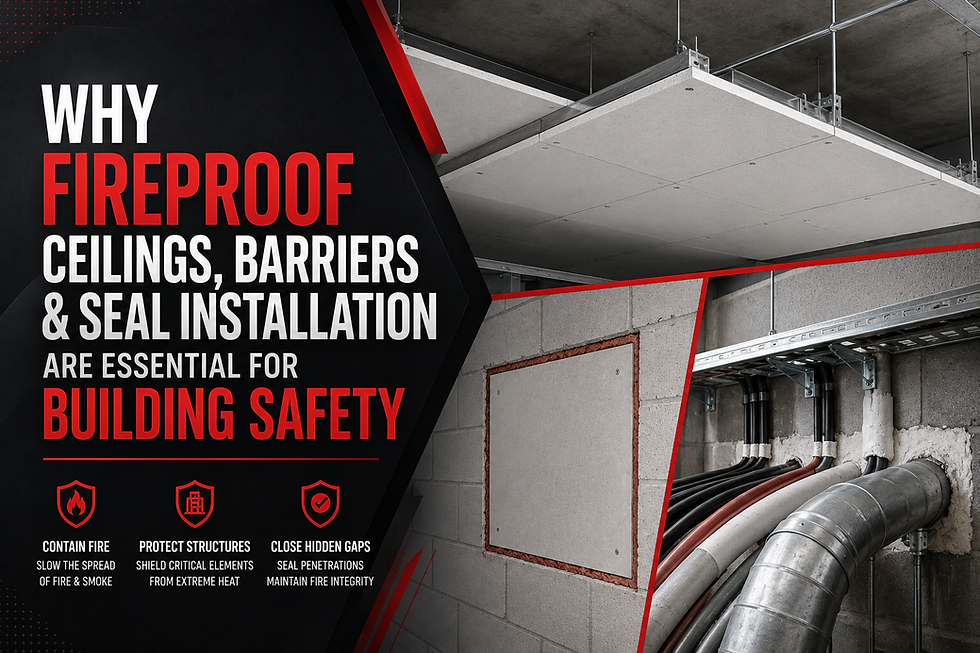
Fire-resistant walls and ceilings
Structural fireproofing (like ROCKLITE® systems)
Fire-rated glass
These systems are designed to:
Contain fire within a specific area
Slow down heat transfer
Prevent structural collapse
Key Differences
Active Fire Protection | Passive Fire Protection |
Requires activation | Always working |
Fights fire | Contains fire |
Needs regular testing | Low maintenance |
Examples: sprinklers, alarms | Examples: fire doors, fireproofing |
Why You Need Both
Relying only on active systems is risky. If alarms fail or sprinklers don’t activate, the fire can spread rapidly.
Passive systems act as a built-in safety net, ensuring:
Fire is contained
Escape routes remain safe
Structural damage is minimised
Together, they create a complete fire protection strategy.
Where Passive Protection Is Critical
Passive systems are especially important in:
Warehouses and factories
Office buildings
Shopping centres
Hotels and public spaces
In these environments, fire spread must be controlled immediately to avoid large-scale damage.
Phrocklite’s Approach
Phrocklite focuses on high-performance passive fire protection systems, offering:
Fire-rated doors and barriers
Structural fireproofing solutions
Custom installations for commercial and industrial buildings
Their solutions are designed to integrate seamlessly into your building while meeting strict compliance standards.
Conclusion
Active systems may fight the fire—but passive systems buy you time.
And in a fire, time is everything. Investing in both ensures your building is not only protected—but prepared.


Comments