


Passive Fire Protection: The Silent System That Saves Lives

When people think about fire safety, they picture alarms, sprinklers, and extinguishers. But what if the most important protection in your building doesn’t make a sound at all? That’s where passive fire protection comes in — and it could be the difference between a contained incident and a catastrophic loss.
What Is Passive Fire Protection?
Passive fire protection is built directly into the structure of a building. Unlike active systems that require activation, passive systems are always working — 24/7.
They are designed to:
Contain fire within specific areas
Slow down the spread of flames and smoke
Protect escape routes
Maintain structural integrity
This gives occupants valuable time to evacuate and emergency services time to respond.
Why It Matters More Than You Think
Fires don’t just destroy — they escalate quickly. Without proper fire compartmentation:
Flames spread through ceilings, ducts, and corridors
Structural elements weaken faster
Escape routes become inaccessible
Passive fire protection prevents this by compartmentalising the fire, stopping it from moving freely through a building.
Key Systems That Make the Difference
At companies like P&H, passive fire protection includes:
Fire-rated doors – Designed to withstand extreme heat and prevent fire spread
Fireproof plaster systems (ROCKLITE®) – Protect structural elements from direct flame exposure
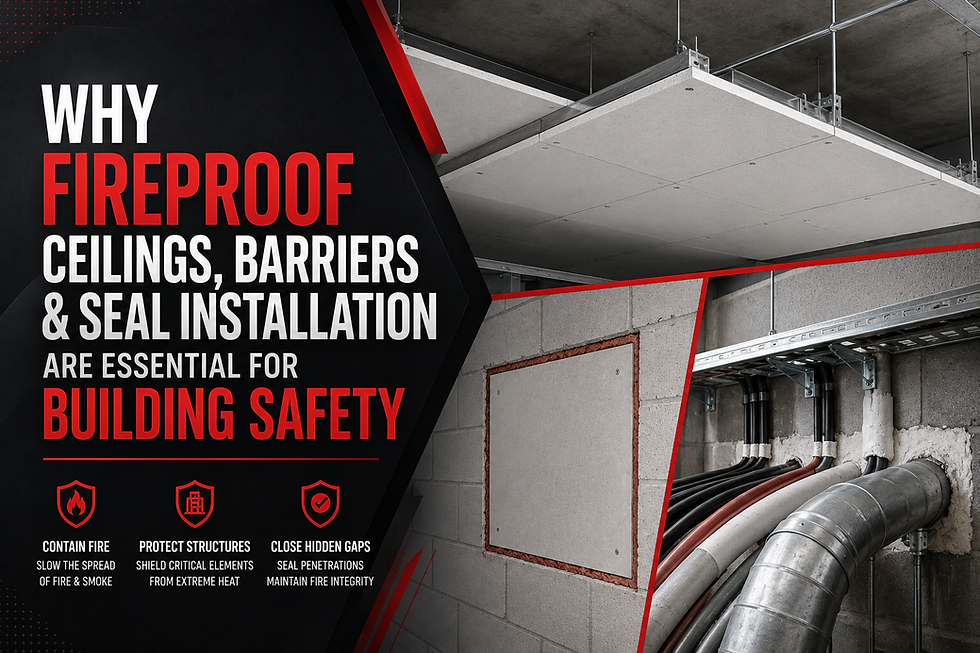
Fire barriers and ceilings – Contain fire within zones
Seals and penetration protection – Close off gaps where fire could travel
These systems are engineered to keep critical structures below failure temperatures during a fire.
The Bottom Line
Fire safety doesn’t start when a fire breaks out — it starts in the design and materials of your building. Passive fire protection is the unseen system that:
Buys time
Saves lives
Protects investments
If your building isn’t properly protected, the question isn’t if it matters — it’s when.


Comments