


Is Your Building Fire Compliant? What South African Businesses Need to Know in 2026

Introduction
Fire safety is not just a legal requirement in South Africa—it’s a critical responsibility for any business owner, property developer, or facility manager. Yet many buildings remain non-compliant or under-protected, putting lives, assets, and operations at risk.
With stricter enforcement of fire regulations and increased awareness around workplace safety, 2026 is the year to take fire compliance seriously.
What Is Fire Compliance in South Africa?
Fire compliance refers to meeting the standards set out in:
SANS 10400 (Building Regulations)
Fire safety bylaws (municipal regulations)
Occupational Health and Safety requirements
These regulations ensure that buildings are designed to:
Slow down fire spread
Protect structural integrity
Allow safe evacuation
Common Fire Compliance Gaps
Many commercial and industrial buildings fall short in areas such as:
No fire-rated doors or incorrect installations
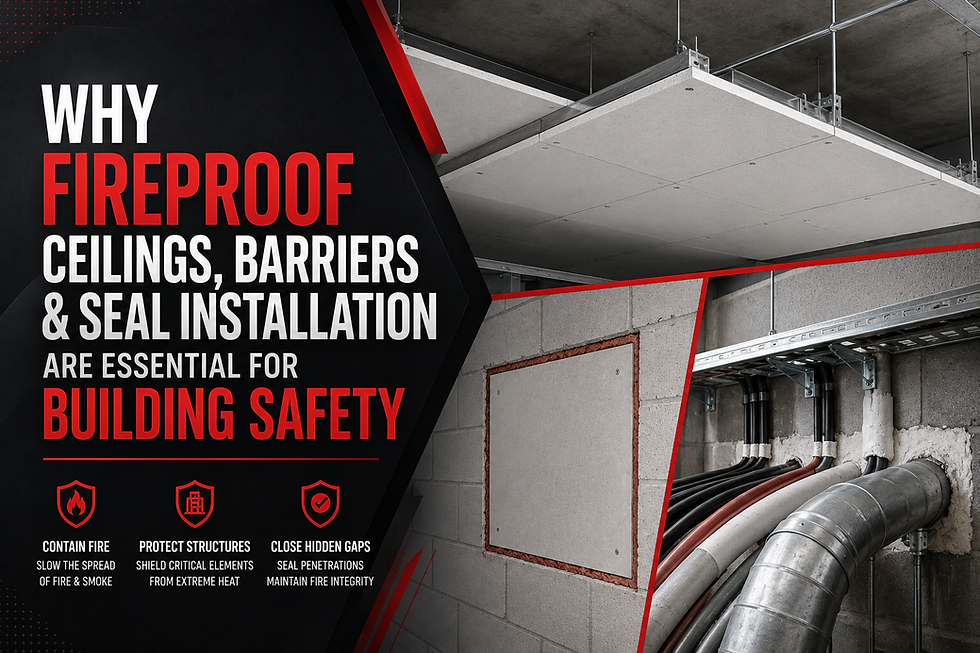
Lack of fire-resistant ceilings or partitions
Exposed structural steel without protection
Poor sealing of service penetrations
These gaps can cause rapid fire spread and structural collapse within minutes.
The Role of Passive Fire Protection
Passive fire protection is built into the structure itself and works automatically during a fire, without human intervention.
This includes:
Fire-rated doors
Fire-resistant plaster systems
Fire barriers and ceilings
Fire-rated glazing systems
Solutions like ROCKLITE® fireproofing systems help maintain structural stability and significantly slow down fire progression.
Why It Matters for Your Business
Non-compliance can lead to:
Insurance claim rejections
Legal liability
Business shutdowns
Loss of life and reputation
On the other hand, a compliant building:
Protects your people and assets
Meets insurance requirements
Enhances property value
Ensures business continuity
How Phrocklite Can Help
Phrocklite specialises in fully integrated passive fire protection systems, including:
Fire-rated doors and barriers
Structural fireproofing
Compliance-driven installations
With over 40 years of experience, they help businesses identify risks, upgrade systems, and meet regulatory standards.
Conclusion
Fire compliance isn’t something to delay. It’s a critical investment in safety, legality, and long-term business protection. If you’re unsure whether your building is compliant, now is the time to act—before it’s too late.


Comments