


What Is Passive Fire Protection – and Why It Saves Lives
- phrocklitepps
- Sep 9, 2025
- 1 min read
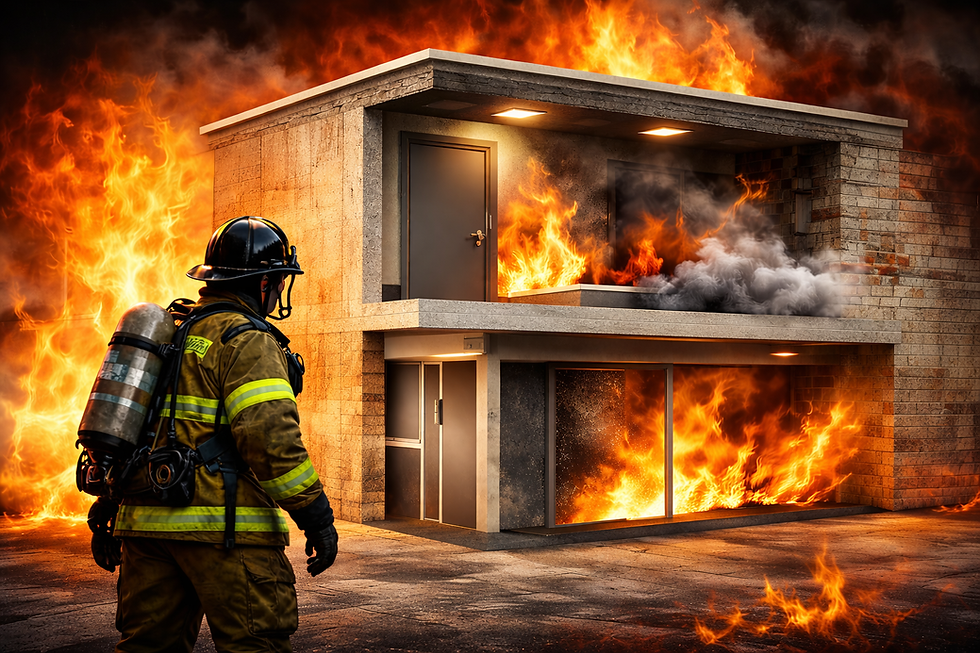
Fire safety in buildings is often associated with alarms, sprinklers, and extinguishers. While these systems are critical, they rely on activation. Passive fire protection, on the other hand, works continuously — even when systems fail.
Passive fire protection is built into the structure of a building. It is designed to contain fire, slow its spread, and protect escape routes, allowing occupants time to evacuate and emergency services time to respond.
PH ROCKLITE® specialises in passive fire-protection systems that include fire-rated doors, plaster systems, barriers, ceilings, and seals. These systems compartmentalise fire, preventing it from spreading rapidly through corridors, stairwells, and service shafts.
Fire doors play a vital role in this strategy. When correctly installed and maintained, they can withstand extreme heat for specified periods, protecting lives, assets, and structural integrity.
In South Africa, compliance with SANS and fire-safety regulations is not optional — it is a legal requirement. Passive fire protection ensures that buildings meet regulatory standards while providing peace of mind to owners, occupants, and insurers.
Fire safety starts long before a fire begins — it starts in the design and materials used.


Comments